I want to talk a bit about the psychology of retirement which has been on my mind a lot lately...so it seems like the right moment.
Let's start with baby boomers.
First let me say that I love my generation: screaming at Beatles concerts in the '60s, serious anti-Viet Nam war protests in the early 70's, the "sit up and take notice of what is really needed" of the later '70's and '80's and the "OMG, I've gotta make a living" of later years, the boomer generation has had its own expression of many different beliefs and values. And left a stamp on American society that has had a big impact on daily life.
Now we boomers are hitting retirement age. Although it seems to anyone working full time that retirement would be really easy, it is not always the case. And the fact that people in their 20's 30's and 40's should be thinking about leisure activities to develop for retirement is a shocking concept to many. People are not very good as saving $ in the US but they are even less likely to develop hobbies or interests they can pursue when they are retired.

Let's start with baby boomers.
First let me say that I love my generation: screaming at Beatles concerts in the '60s, serious anti-Viet Nam war protests in the early 70's, the "sit up and take notice of what is really needed" of the later '70's and '80's and the "OMG, I've gotta make a living" of later years, the boomer generation has had its own expression of many different beliefs and values. And left a stamp on American society that has had a big impact on daily life.
Now we boomers are hitting retirement age. Although it seems to anyone working full time that retirement would be really easy, it is not always the case. And the fact that people in their 20's 30's and 40's should be thinking about leisure activities to develop for retirement is a shocking concept to many. People are not very good as saving $ in the US but they are even less likely to develop hobbies or interests they can pursue when they are retired.

I spent my career working in the field of psychology. I often counseled people about the issues of retirement that many do not think of. The "what will you do every day, day after day?" questions.
I taught therapists about the need to educate clients to prepare for "the leisure years" of retirement. With good health and longevity, you could end up being retired more years than you actually worked at a job and spent raising children to adulthood. Age 62 and up is a big chunk of your life.
I taught therapists about the need to educate clients to prepare for "the leisure years" of retirement. With good health and longevity, you could end up being retired more years than you actually worked at a job and spent raising children to adulthood. Age 62 and up is a big chunk of your life.

Humans evolved having to work to survive. Hunting, gathering, planting, weaving, etc. Even today, after you may quit your "main work", you need some sort of work to survive and thrive. As a retired person, each of us needs three or four things to do. These need to:
1) absorb our interest
2) engage our skills
3) address needs for both connected time with people and time alone
3) challenge our self esteem and intellect as we shift from "importance at a job" to a whole new identity: that of "aging retired person".
There is a need to redefine yourself in this new role. By that I do not mean you will be a whole new person. Your values and core beliefs are likely to remain constant. However, you now can decide who you want to spend time with and how long you want to stay. You can develop an exercise plan you perhaps never had time to fully engage in. You can eat differently to address concerns about health before they become larger. You can put more energy into a primary relationship that may have been flagging. You may want to develop a few close friends or to build a large circle of acquaintances. You can investigate places you never had time to do before and try activities that are new: the tango, scuba diving, playing bridge, etc.

If you are reading this and you are young, begin thinking about what hobbies you might enjoy, things that might interest you for those retirement years. As the years go by during ages 30 to 60 try out different hobbies, develop interests with this in mind. This in itself is important work!
If you are reading this and you are 55 or older, take stock and see if there are areas that need some attention in your life.
What to do?
I'm big on lists:
A list can help you clarify your thoughts and fine tune interests.
List the things with which you might occupy your time
for example: exercise, learning to cook low fat meals, learning to tune your own motorcycle, learning to paint or weave, studying a foreign language, develop some new friends, learning wood working, learning self defense, etc.
What else?
List some things you are pretty sure you are not interested in but try to be open to new experiences.
List some things you are pretty sure you are not interested in but try to be open to new experiences.
Doing a little volunteer work is a great way to give back to your community. There are tons of volunteer opportunities and great need for your help all over the globe. List 3-5 things you can "try out" in a small way to see if helping in that area would work for you. If not, then move to another project and another, until you find a good fit. Remember, the boomers are also people who have had many advantages and now CAN give back to the globe. Many are dedicated to a cause already. If not, now is a great time to explore.
Next, list things you KNOW you want to do and have been looking forward to having time to pursue.

I'm big on boundaries too: Set boundaries about how much time you give to any hobby, volunteer work, interest. I would suggest keeping it low at first, you can always add more hours later. Also set friendly boundaries about how much time you spend with your best friend, your partner, people you are getting to know. Take your time. Ask for more time from those with whom you wish to be closer. Gently set limits with those with whom you want to spend less time.
Set good boundaries so that others do not end up taking all of your time, leaving you feeling empty, resentful and exhausted. Set clear boundaries in a polite but firm way right from the beginning and stick to them. Of course, you can always change your boundaries if you want to. But it is important to establish a precedent at the outset which gets you respect of others. You are the one at the wheel of this retirement car you are driving. So you can set the driving course, control the speed, stop as needed, make periodic tune ups and practice good maintenance on the Retirement Highway.
A couple of us were recently talking about the art of being polite and moderately sociable as needed. It seemed a consensus but novel idea that retired persons can set boundaries about spending hours with people or subjects we do not find interesting. Set boundaries with people and topics if you do not have good level of comfort. Of course, use your good judgment. If there is a meeting on how to better invest your retirement money, perhaps you should listen well and learn things to make the best informed decisions.
Here is an example: I spent a few years in corporate America. I was not particularly good at corporate meetings. I had good ideas but I learned fairly quickly that the managers were not seeking ideas or innovation but attendance & compliance. Management just wanted people to show up, to be silent, to let them get through their required data and to sign a paper that the meeting was completed. What a waste of human potential! And a waste of time for a room full of bright people! So I now find it very pleasing that I do not ever have to sit through a "be silent" required meeting again. I just will not do it!
Next, list things you KNOW you want to do and have been looking forward to having time to pursue.

I'm big on boundaries too: Set boundaries about how much time you give to any hobby, volunteer work, interest. I would suggest keeping it low at first, you can always add more hours later. Also set friendly boundaries about how much time you spend with your best friend, your partner, people you are getting to know. Take your time. Ask for more time from those with whom you wish to be closer. Gently set limits with those with whom you want to spend less time.
Set good boundaries so that others do not end up taking all of your time, leaving you feeling empty, resentful and exhausted. Set clear boundaries in a polite but firm way right from the beginning and stick to them. Of course, you can always change your boundaries if you want to. But it is important to establish a precedent at the outset which gets you respect of others. You are the one at the wheel of this retirement car you are driving. So you can set the driving course, control the speed, stop as needed, make periodic tune ups and practice good maintenance on the Retirement Highway.
A couple of us were recently talking about the art of being polite and moderately sociable as needed. It seemed a consensus but novel idea that retired persons can set boundaries about spending hours with people or subjects we do not find interesting. Set boundaries with people and topics if you do not have good level of comfort. Of course, use your good judgment. If there is a meeting on how to better invest your retirement money, perhaps you should listen well and learn things to make the best informed decisions.
Here is an example: I spent a few years in corporate America. I was not particularly good at corporate meetings. I had good ideas but I learned fairly quickly that the managers were not seeking ideas or innovation but attendance & compliance. Management just wanted people to show up, to be silent, to let them get through their required data and to sign a paper that the meeting was completed. What a waste of human potential! And a waste of time for a room full of bright people! So I now find it very pleasing that I do not ever have to sit through a "be silent" required meeting again. I just will not do it!
Evaluate your schedule. Look to see if you have a good balance with time alone, time with others, time helping, exercise and taking time for yourself. The number of hours needed will vary for each person, and a person's needs change from time to time. Balance is the important word here. You will feel better and your mood will be brighter if you strive for a good balance of these things.
Moving to a new culture presents new issues, such as leaving familiar haunts and losing regular contact with family and friends. With free video calls through Skype and similar services, you can keep up with family and friends if they are willing to give it a try. It is not the same has hanging out but it is a great way to stay in touch when you are half a world away.
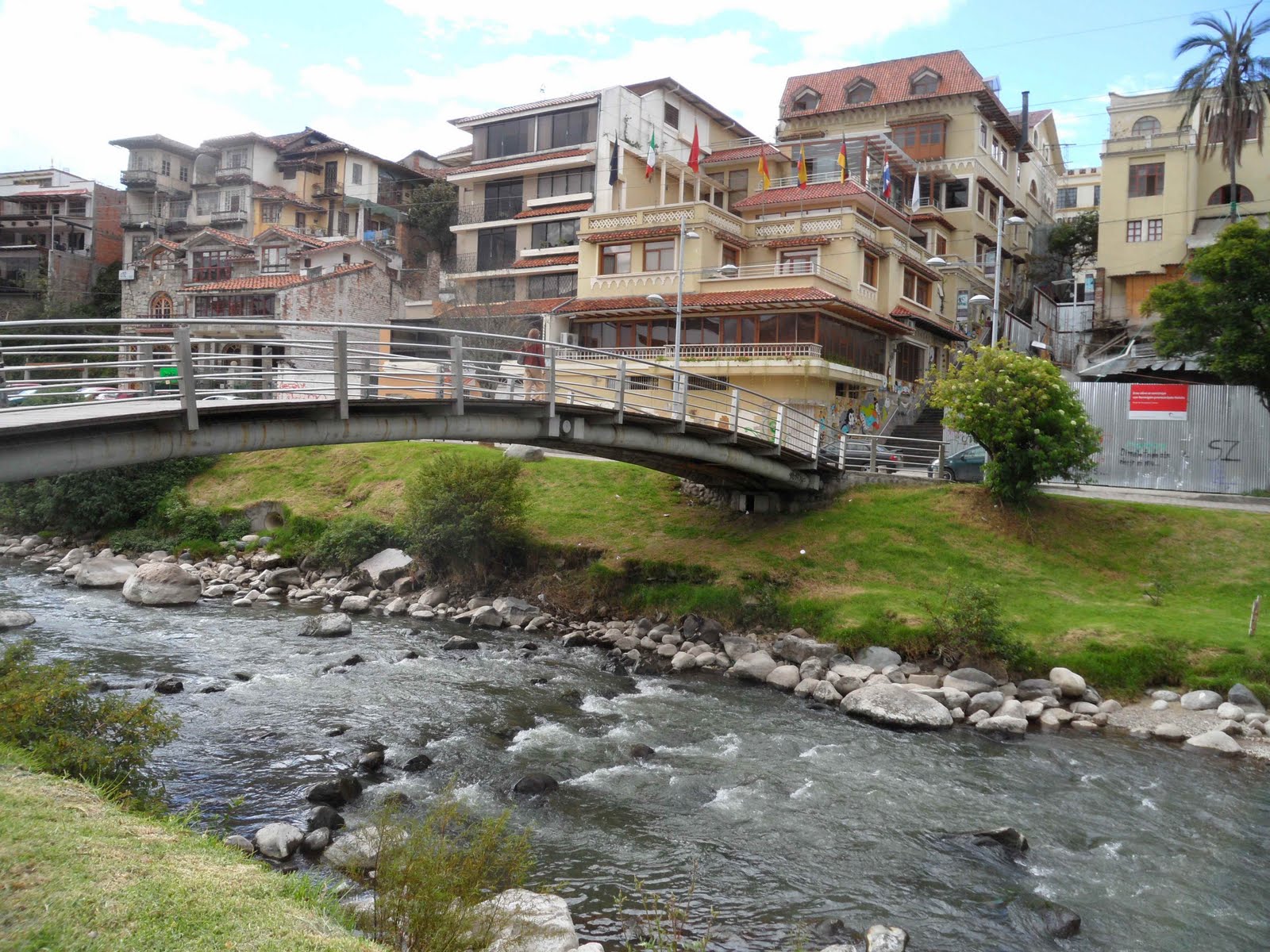
This is my grandson who was eating peaches when I was packing to move. It is hard to be 4700 miles away from my grandchildren and kids (and friends and extended family) but for me there are compelling reasons to live in Cuenca.

With Skype, the video part really adds to the feeling of closeness because you can see their expressions, watch their body language, even see if they are in their jammies or their best outfit to go out!
There are many more thoughts about how to have a happy retirement. Others have written on blogs about this subject. There are books on it. A little work and trying out different interests can provide a great structure for a lively, active retired life. If health issues crop up, you can do your best to work around them and adapt your activities as needed.
Let me know your thoughts too. What are your experiences that have turned out well and those that did not?
This got long! Tomorrow, a short entry about quilting!
Have a fantastic week!
Hasta Luego, Sharon
One's acquaintances may fill the world, but one's true friends can be but few. anon

